 Summarize this Article with AI
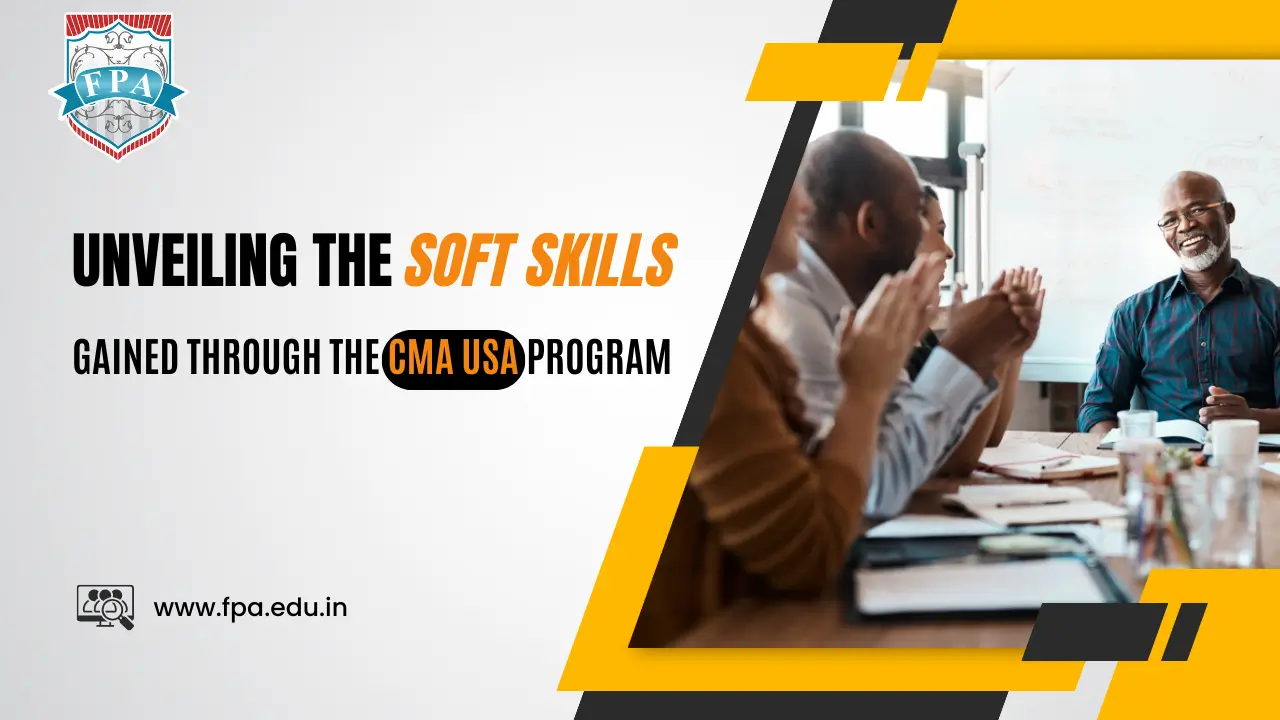
While technical expertise is crucial in the field of management accounting, the Certified Management Accountant (CMA) USA program goes beyond imparting technical knowledge. It also focuses on developing essential soft skills that are invaluable in today’s workplace. In this article, we’ll unveil the soft skills gained through the CMA USA program and how they contribute to professional success.
- Critical Thinking and Problem-Solving: The CMA USA program cultivates critical thinking and problem-solving skills essential for analyzing complex financial data and making informed decisions. CMA candidates learn to approach challenges with a strategic mindset, identify underlying issues, and develop creative solutions. This ability to think critically and solve problems effectively enhances decision-making capabilities and adds value to organizations.
- Communication and Presentation Skills: Effective communication is a hallmark of successful management accountants. The CMA USA program hones candidates’ communication and presentation skills, enabling them to convey financial information clearly and persuasively to diverse stakeholders. Whether communicating financial results to senior management, presenting recommendations to clients, or collaborating with cross-functional teams, CMA professionals excel in articulating complex concepts in a concise and understandable manner.
- Leadership and Teamwork: Leadership and teamwork are essential components of the CMA USA program, as candidates often work collaboratively on group projects and case studies. Through teamwork, CMA candidates learn to leverage their strengths, communicate effectively, and achieve common goals. Additionally, the program emphasizes leadership skills such as delegation, motivation, and conflict resolution, preparing candidates to lead teams and drive organizational success.
- Adaptability and Resilience: In today’s dynamic business environment, adaptability and resilience are essential qualities for management accountants. The CMA USA program instills these attributes by exposing candidates to real-world business scenarios and challenging situations. By navigating diverse case studies and simulations, CMA candidates learn to adapt to changing circumstances, overcome obstacles, and thrive in a fast-paced and evolving workplace.
- Ethical Integrity and Professionalism: Ethical integrity and professionalism are core values of the CMA USA program. Candidates are required to adhere to the highest ethical standards and conduct themselves with professionalism and integrity at all times. Through case studies and ethical dilemmas, CMA candidates develop a strong ethical compass and learn to apply ethical principles in their decision-making process, earning the trust and respect of colleagues, clients, and stakeholders.
- Time Management and Organization: The CMA USA program demands strong time management and organizational skills to balance study commitments with professional and personal responsibilities. CMA candidates learn to prioritize tasks, manage deadlines, and optimize study schedules to maximize efficiency and productivity. These time management and organizational skills are transferable to the workplace, enabling CMA professionals to juggle multiple projects and responsibilities effectively.
Conclusion: The CMA USA program not only equips candidates with technical expertise in management accounting but also develops essential soft skills that are highly valued in today’s workplace. From critical thinking and communication to leadership and adaptability, CMA professionals possess a well-rounded skill set that enables them to excel in diverse roles and industries. By unveiling the soft skills gained through the CMA USA program, professionals can leverage their qualifications to achieve career success and make a meaningful impact in their organizations.